Deutscher Werkbund
The Glass RoomThe Deutscher Werkbund enters the novel through Die Form, its architectural review, which turns the Landauer House into the subject of a public dispute. The argument weighs modernist form against social purpose and the claims of inhabitants: whether the house is a work of art, a plutocrat’s palace, or a place in which anyone could actually live. As the building is repeatedly appropriated and reinterpreted, the debate becomes an early register of the novel’s central question: architecture belongs not only to its designer or owner, but also to the changing powers and communities that use it.
The journal and the house
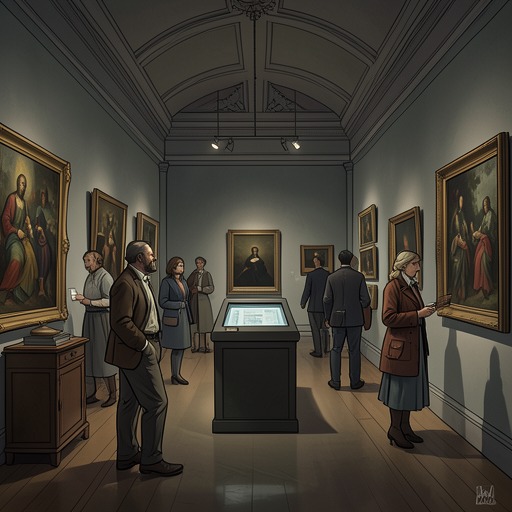
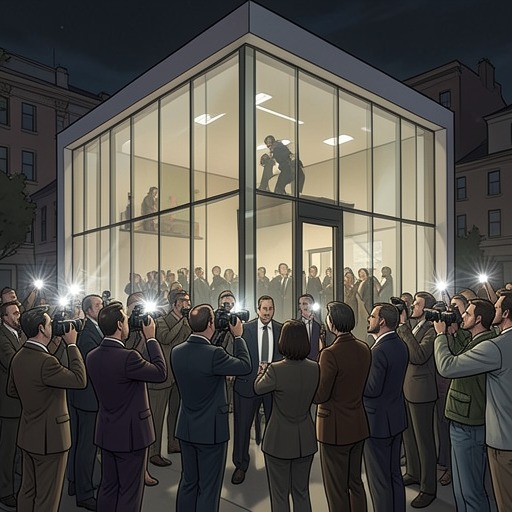
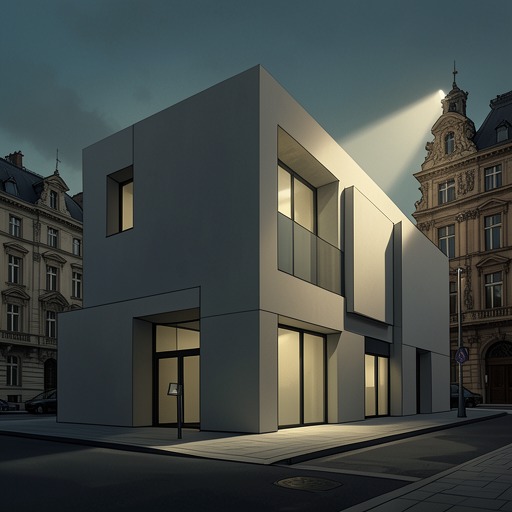
A journalist attending a party at the Landauer House asks whether it is habitable. The question appears in the next edition of Die Form, the Deutscher Werkbund’s architectural review, and prompts a debate in its columns. The house is thus introduced to readers not simply as a private home but as an architectural proposition whose design invites public judgment.
The responses divide over what modern architecture ought to do. Critics call the building a lapse of political taste and bourgeois excess: architecture, they argue, should provide decent, well-built homes for workers, citing the Weissenhofsiedlung in Stuttgart, Karl-Marx-Hof in Vienna, and the Baa development in Zlin as alternatives to a palace for plutocrats. Defenders answer that this criticism is mean-spirited, praising the house’s pure lines, austerity, and perfection of taste, and the experience of entering what they regard as a work of art. The dispute exposes a conflict between architecture’s social obligations and its capacity to serve as an object of aesthetic distinction.
Design under the pressure of daily life
The correspondence also tests modernist ideals against mundane domestic arrangements. Readers debate the combination of dining area, sitting area, study, and library, including the possibility that food smells might travel into the sitting space. One correspondent asks whether the lady of the house can rearrange the furniture without upsetting the interior’s symmetry, balance, and proportions. The concern is pointed: a design praised for formal purity may leave little room for the changes and disorder of ordinary living.
That question acquires force from the house’s actual material organization. Its vast living room measures 230 square metres, with two glass walls looking across the city toward Špilas. Chrome pillars support the structure, while a partition of pure onyx divides the sitting area from the so-called library; cream linoleum provides a spare, functional floor. The house’s scale and carefully composed materials make the opposing descriptions—habitable home and privileged artwork—difficult to separate.
The building’s changing uses
The novel follows the house beyond the original controversy. After the Landauers leave in 1938, the building is transformed into a Nazi biometric centre: its rooms are refitted for anthropometric measurements, photography, and documentation. The onyx wall and Glass Room, once components of a carefully composed domestic interior, become part of an apparatus of racial classification. The contrast makes visible how design can be seized and made to serve a political order utterly opposed to the home’s earlier ideals.
Later, the building serves as a children’s physiotherapy gymnasium. A newspaper article calls it an architectural treasure yet questions whether a landmark of European modernism should be used as a hospital annexe. Its defense of treatment for sick children sits beside its hesitation about the building’s function, bringing the old question of use back in a new form: preservation and public care need not point in the same direction. The Glass Room is not simply displayed; it is used by children receiving treatment and, later, by Tomáš and Zdenka as a space of work, dance, and intimacy.
Heritage, memory, and public ownership
Under socialism, a member of the State Committee for Architectural Heritage tells a journalist that Rainer Abt’s design is generally considered his masterpiece and that the committee is examining how the city treats the past. The proposal to restore the house as a museum makes architectural heritage a matter of public policy, while the newspaper article frames its past as a story of capitalist privilege and its present as a question of how ordinary people might gain access to what was once reserved for a few.
The article also records the physical costs of history. A wartime bomb blast destroys the original plate-glass windows; smaller panes replace them, though their lowering mechanism remains in working order. When the house is later repaired, the large panes return and the Glass Room recovers its lucidity. Yet restoration cannot make the building’s history still. The novel sets the museum idea against the living uses and memories accumulated in the same rooms, suggesting that preserving a structure is not the same as resolving who owns its meaning.
The Werkbund’s place in the novel
The Deutscher Werkbund is not represented through an institutional portrait or a roster of members; it appears through the journal that gives the Landauer House a forum and a critical vocabulary. Die Form’s argument stages architecture as a contested social practice rather than a settled style: formal perfection may be celebrated, but it is also challenged by class inequality, domestic needs, political seizure, medical use, and heritage claims.
Across the house’s successive lives, the original debate remains open. The building can be treated as a private luxury, an instrument of racial bureaucracy, a therapeutic space, or a public monument. The Werkbund’s journal initiates this chain of interpretations by asking what modern architecture is for—and the novel’s history shows that the answer changes with the people and institutions able to occupy the space.